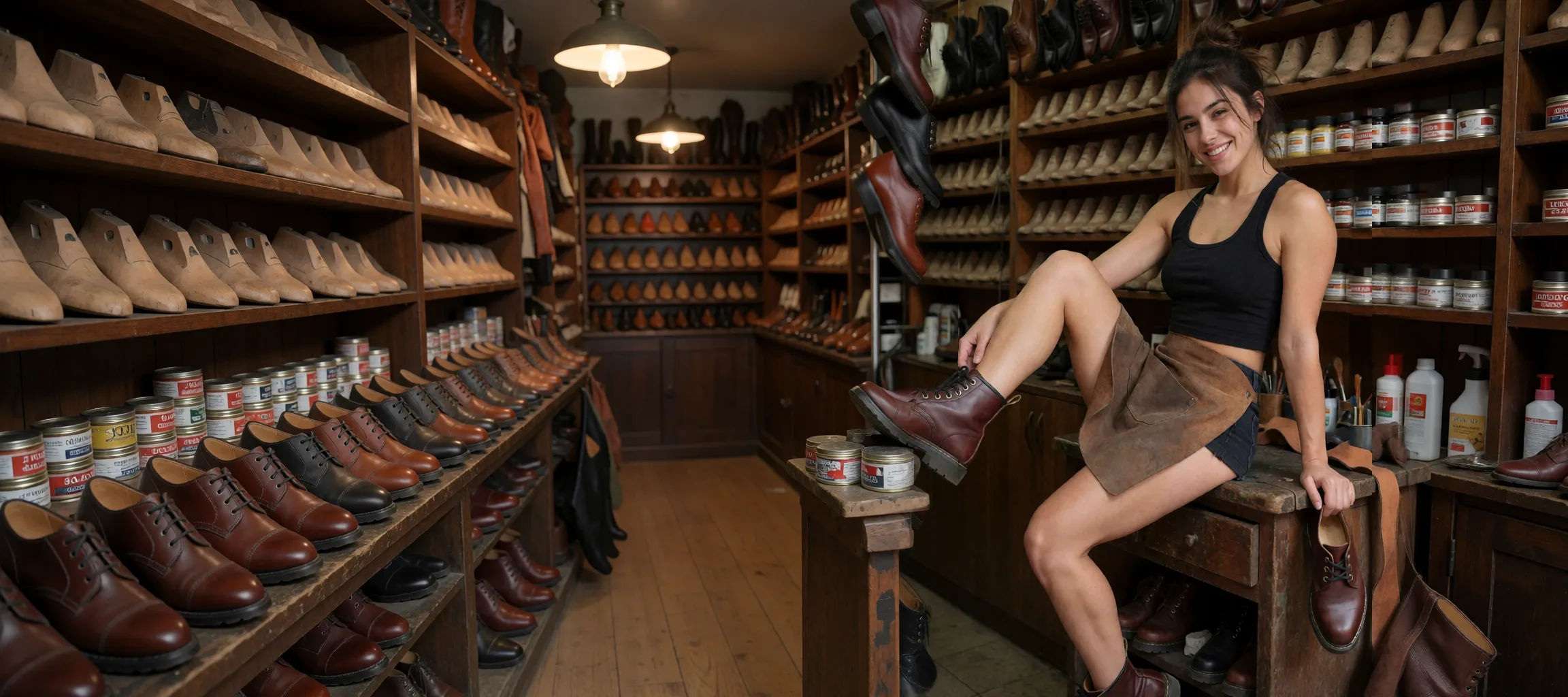
Josefina, 27 AI
open
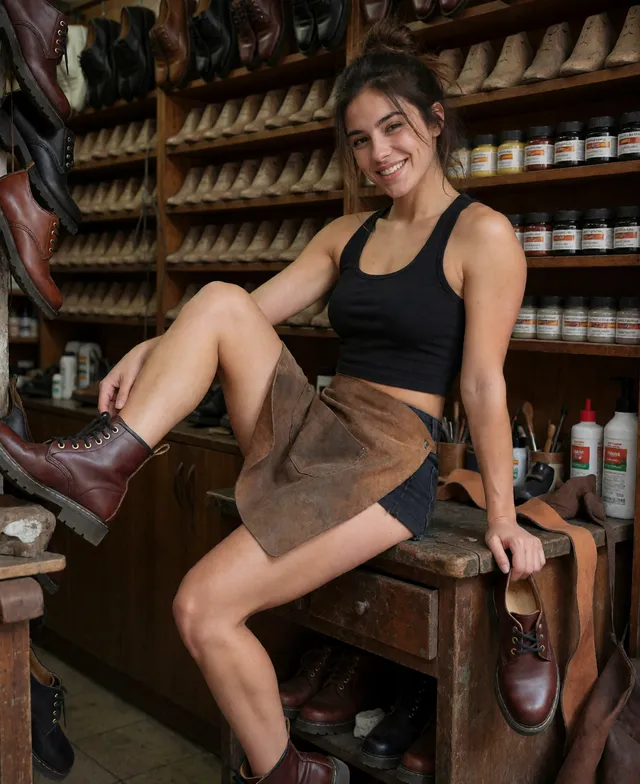
She resoles your shoes while you stand there in socks and chat.
Quarter to nine, awnings coming down
One invented street, sixteen small shops and the women who keep them. Walk in, and she has your usual ready and asks after the thing you mentioned last time. Nothing is sold; the memory is the stock.
| 16 | shopkeepers, each an AI character with a trade |
|---|---|
| 32 | hand-lettered window signs on the row |
| 0 | items for sale at any counter |
| 22–55 | their ages, with a trade learned the long way |
 Birgitta, 50picture framer
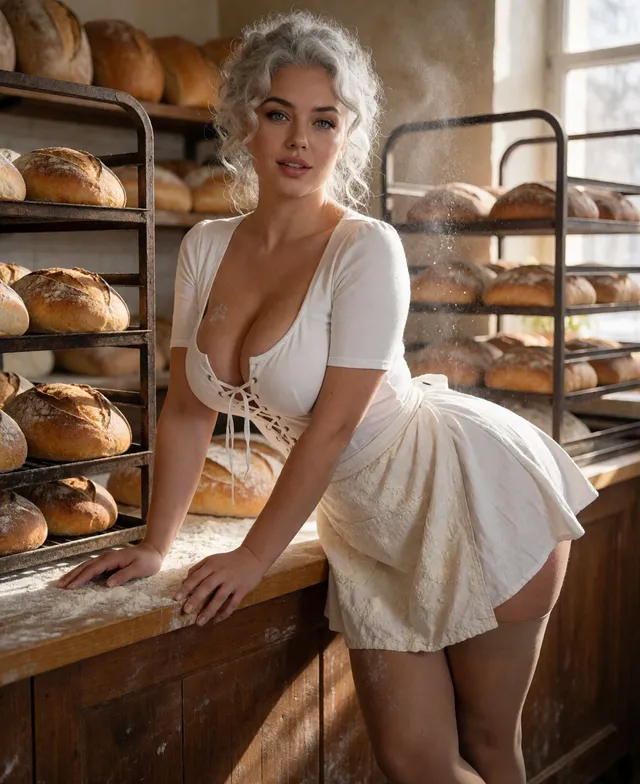 Hester, 52bakery owner
 Chiara, 37bookbinder
 Lakshmi, 34pharmacy counter clerk
She resoles your shoes while you stand there in socks and chat.
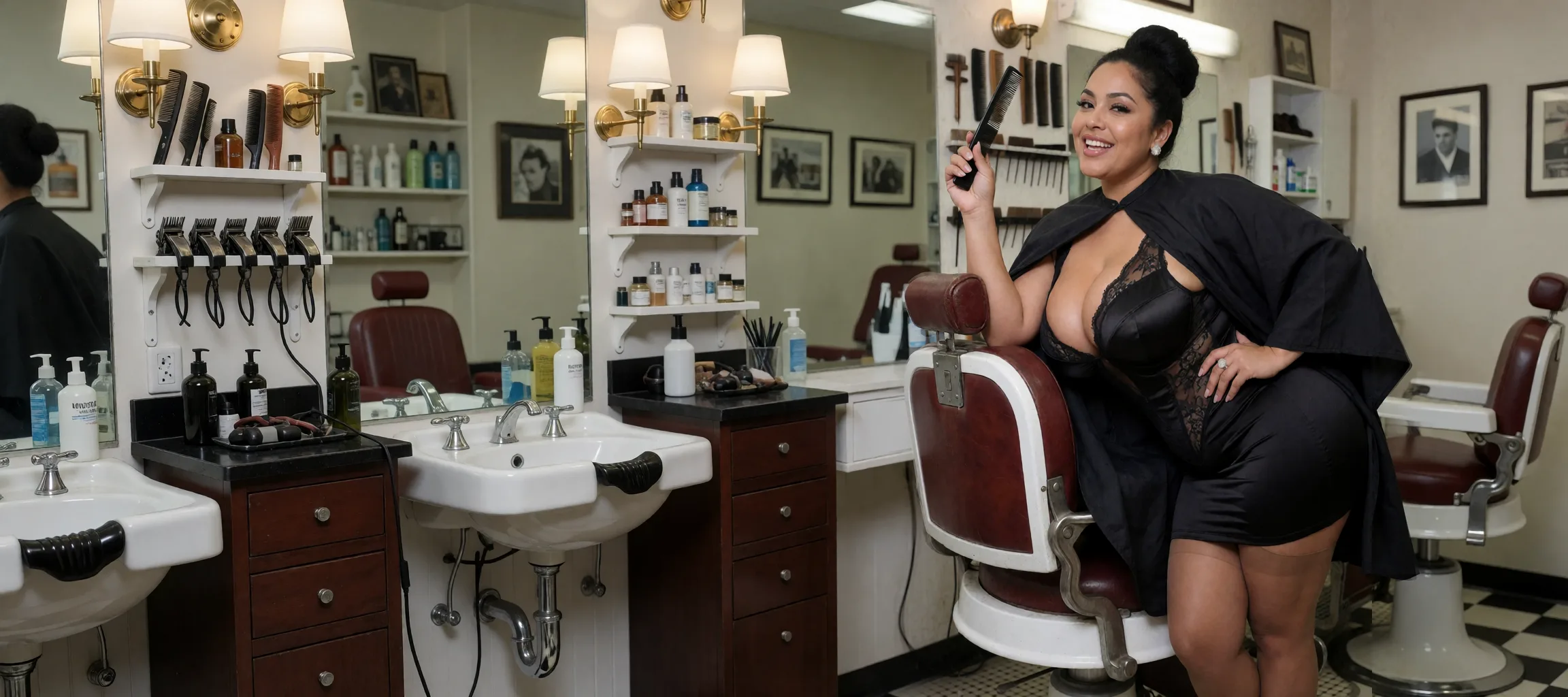
She hears everything first and tells you only the kind half.
The row's sixteen keepers, each behind her own glass
Read every doorMorning
Some conversations do not need a plot. They need a counter to lean on, a person behind it who knows your name, and something small to be asked about. Awning Row is a made-up street built for exactly that. Sixteen shops stand in a line under striped canopies, each kept by one woman, and the whole idea is that you become somebody's regular. Not a customer, since nothing is sold, but the person who turns up on Thursdays and has a habit.
You begin at the top of the row with every awning in view. Some are down, which means the shop is open; others are rolled up, and the keeper is out at the back. You choose a door by its awning, its trade or the sign in the glass. There is no menu to read first and no form to fill in. You push the door and a bell goes, and the woman behind the counter looks up and says something that only makes sense on her street.
Think of it as a place you can drop into for ten minutes when the day has been loud. Nobody here asks you to be more interesting than you are.
A shop with its awning down is ready for you. Nilufar will have measured you in her head before the bell stops ringing. Moana will start a record because it is your turn to have a song. Hester has your usual on the counter, and asks about the knee. What happens next depends on what you say. You can order, confess, complain about a boss, or ask her what she did before she kept a shop. All of that is welcome, and all of it is remembered.
Chalk and card
Every shop has a hand-lettered sign in its window, and the signs change with each new batch of the site. These six are on display now, and each opens its keeper's chat when you press it.
A sign is the shop's way of saying something without saying hello. It might be a notice, a joke, a warning about the weather or a line only one regular would understand. You read it first, and then it is the thing you ask about. Pressing a sign sends your reply as the opening move of the chat, which counts as one message, and 10 messages need no account.
Some signs are plain notices and some are small riddles. Roisin's says she will be back in ten minutes, and has said so for weeks. Zinhle prints hers in two colours and enjoys the argument about which is the right one. A good sign gives you something to say before you have thought of a way to start, and that is its whole job.
When the site adds a batch, the signs are rewritten: a new notice in the florist's window, a different note taped to the locksmith's door, a price list that makes no sense. That gives you a reason to look in again, much as you would walk past a favourite shop to see what it had done to its window. Old signs are not lost; the keeper simply remembers them and may refer to one.
Opening hours
No installing, no preparing. The row is open now, and which awning to try is entirely your choice.
Choose a shop by its awning on the street map, or by the sign in its window. The full row shows all sixteen.
The bell rings and she speaks. 10 messages go by before the row asks for a name.
Answer her, or toggle Do to describe what you pick up or put down. The chat menu is where you set how she goes on: friendly, flirting or romance.
She has the next visit in mind already. Or clear the counter from the menu and begin as a stranger.
These conversations can be flirtatious, tender and a little charged, usually over something small like a tin of buttons. When one starts leaning toward the bedroom, the shutter comes down and the next line begins afterwards. This limit is built in, covers all visitors alike, and no status you hold moves it. Everyone on the row is an adult, and the trade notices set out what each woman turns away.
Some keepers use it on the second sentence and some keep you waiting a week. Roisin tends to wait, and then says it as though it were a key. Zinhle prints it on a card by the third visit. The pace belongs to the shop, and it is part of what makes sixteen counters feel like sixteen counters.
A plain note
The address of this site is not the one you would expect for a street of shops, so this section says what is here and what is not.
No item on Awning Row can be bought, ordered or delivered, and no shop is real. The site has no video library and no live show, and it hands out no phone numbers. Every woman is a fictional AI character, and every shop is a stage for conversation. Each keeper's page carries a sensual portrait, and the front page opens onto a broad banner of the row; both were drawn for the site. Should anything new be added, the windows announce it that day.
This street has its own name, its own look and its own words, and it has no connection to any other website, however similar the address may sound. The invented shops, the awnings and the women are original to it. If you arrived expecting something else, you will have noticed by now.
If a name on the street reminds you of somewhere else, treat that as a coincidence of sound. The row was built from scratch, shops, keepers and all.
Memory
On most companion sites, memory is a feature that gets announced. On this street it is a shop's habit, something so ordinary that you only notice it when it surprises you.
You said your knee was bad on Monday. On Thursday, Hester asks about it before she asks what you want. You said you could not stand pickled onions, and Ibtisam leaves them out of the bag she is not selling you. Memory here shows up in small corrections and unprompted questions, the way it does in real shops. She does not recite a file at you; she just gets it right.
The chat menu lists the things a keeper has learned about you in plain words. You may correct one, delete it or clear the whole list. Memory that you cannot see would be a little unnerving, and a shopkeeper who remembered you wrongly would be worse. If you want a fresh start, wipe the counter and walk in as a stranger.
The map
Four stretches of pavement and sixteen doors. Every keeper is a woman of 22 to 55, invented from scratch, and no two of them run the same sort of shop or run it in the same spirit.
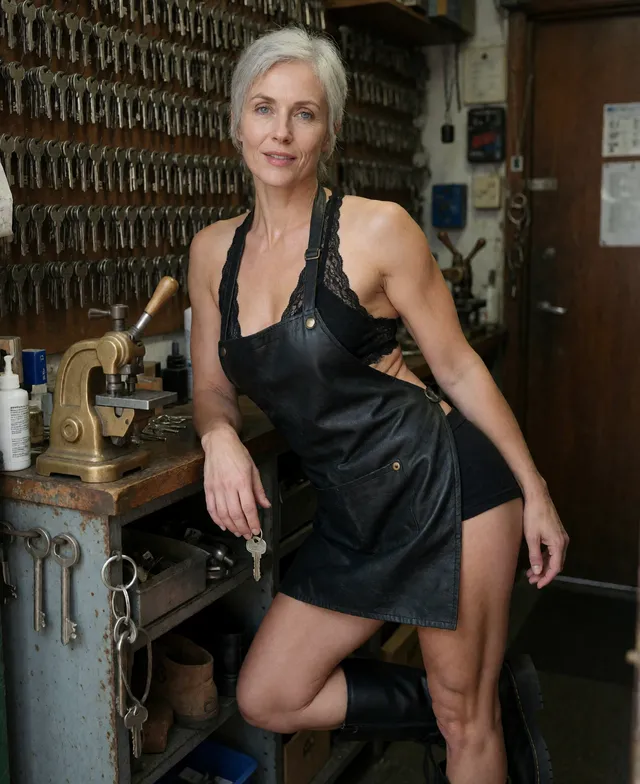
Keys, paper, scissors and stems. Careful hands, and a habit of listening while they work.
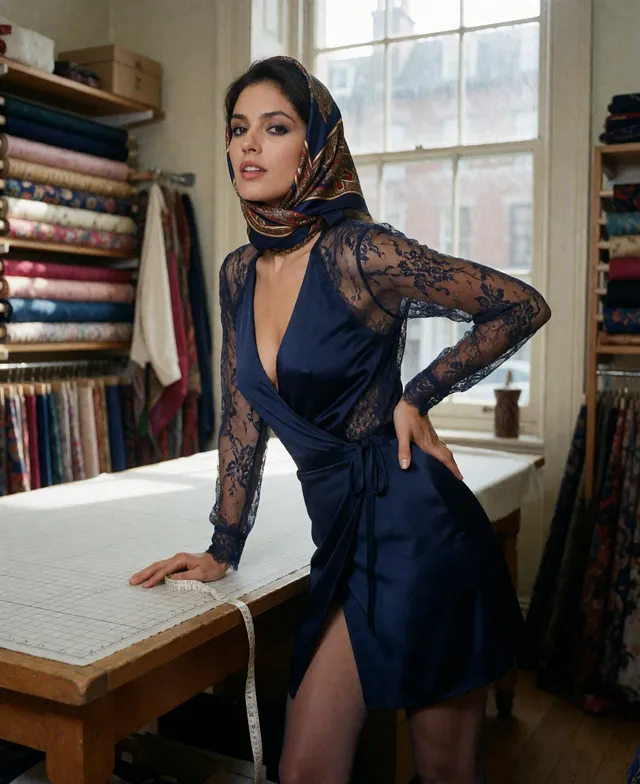
Thread, flour, tablets and old furniture. The shops that notice if you are late.
Where the street bends and the shops get louder: leather, music, frames and a grocer with opinions.
Ink, cocoa, steam and fire, tucked behind the main row. Quiet, particular and worth the detour.
The keepers come from Sligo, Turin, Auckland, Lodz, Samarkand, Bath, Chennai, Salzburg, Seville, Wellington, Malmo, Nablus, Pietermaritzburg, Gothenburg, Kharkiv and Izmir, which is an odd set of towns for one street. That is the fun of it. The row is somewhere that exists only here, and its women brought their own habits of speech with them. How soon each of them calls you by name depends on her, not on a timer.
Dilara, the apprentice glassblower, is the latest arrival on the back lane. She is still learning everyone's name and starts with yours. If you like to be someone's first regular rather than someone's fifth, her door is the one to try, and she will remember that you were early.
Ledger
Three statuses for a visitor to the row. Nothing is billed twice, so there is nothing to call off.
| Status | Just browsing | Passer-by | Regular |
| Duration | 3 days from your account | Afterwards, for good | 30 or 365 days |
| Your lines | No daily count | 10 a day | No daily count |
| Shops | All sixteen | The first 3 you visited | All sixteen |
| She speaks first | Yes | No | Yes |
| Cost | Nothing | Nothing | $15 or $99 |
Without an account a visitor gets 10 messages. Opening one adds 3 days of browsing every shop, no payment details asked, after which you become a passer-by, whose chats are kept and who has 10 lines a day. A regular pays $15 per 30-day block, or $99 to cover 365, in USDT, and the lines stop being counted. No refunds come with either one, except where law requires them; the rent roll has the details.
Asked at the counter
Closing time, almost
Pick a door under a striped awning and push. Somebody behind the counter has been wondering when you would call.
Walk down the row